Walk into any two renovated homes, and you can usually feel the difference before you can name it. One feels solid, quiet, and considered: doors that close with a satisfying click, trim that meets in seamless miters, floors that don’t creak. The other looks fine in photos but feels a little hollow up close. That gap is craftsmanship, and in luxury home remodeling in Charlotte, NC, it’s the whole game.
“European-standard craftsmanship” gets used a lot in marketing. So let’s actually unpack what it means, why it costs more, and how it shows up in the parts of a renovation you’ll live with for decades.
Craftsmanship Is Mostly Invisible Until It Isn’t
Here’s the counterintuitive truth about high-end work: most of what you’re paying for, you’ll never see. The quality of a renovation lives in the layers behind the finishes: the framing, the substrate, the waterproofing, the way transitions between materials are handled.
You don’t notice a perfectly executed tile substrate. You notice when a cheap one fails. You don’t notice level, square, and plumb framing. You notice when a door starts sticking a year later, or when a crack appears where the addition meets the original house. Craftsmanship is the discipline of getting the invisible parts right specifically because no one is checking. That discipline is exactly what separates a luxury result from an expensive-looking one.
The European Apprenticeship Difference
The phrase “European standards” points to a genuinely different way of learning the trade. In much of Europe, becoming a carpenter means a formal, multi-year apprenticeship of supervised, hands-on training with an emphasis on precision, joinery, and doing things properly rather than quickly.
That training instills a few habits that carry through to every project:
- Tighter tolerances. Where “close enough” is often the norm, an apprenticeship-trained carpenter is working to a finer margin. Those small margins compound into a finished home that feels more precise.
- Respect for materials. Understanding how wood moves, how materials expand and contract, and how to work with them rather than fight them is what keeps a beautiful detail beautiful ten years on.
- Joinery as a craft. The connections how pieces meet, join, and transition are treated as something to be done well, not just fastened together.
- A finish-first mentality. The final look isn’t an afterthought applied at the end; it’s the goal the whole build is oriented around from the first framing decision.
This is the background our owner, Yeti, brings to Nordic Builders. He completed his carpentry apprenticeship in Norway, and he builds to those European standards. It’s not a slogan on the website; it’s the reason our finished work looks and feels the way it does.
Where You’ll Actually See It in a Luxury Remodel
If craftsmanship is mostly invisible, where does it become visible? In the details that reward a close look:
Finish Carpentry and Trim
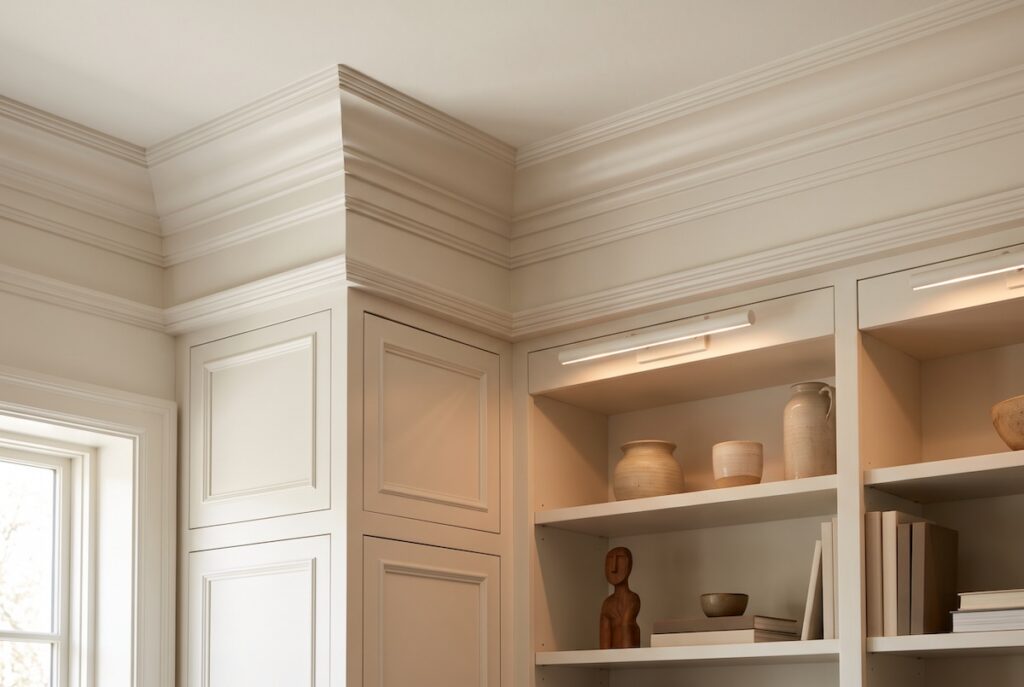
Crown molding with tight, gap-free miters. Built-ins that look architectural rather than added-on. Doors and cabinetry that align and operate perfectly. This is where trained hands are unmistakable.
Transitions
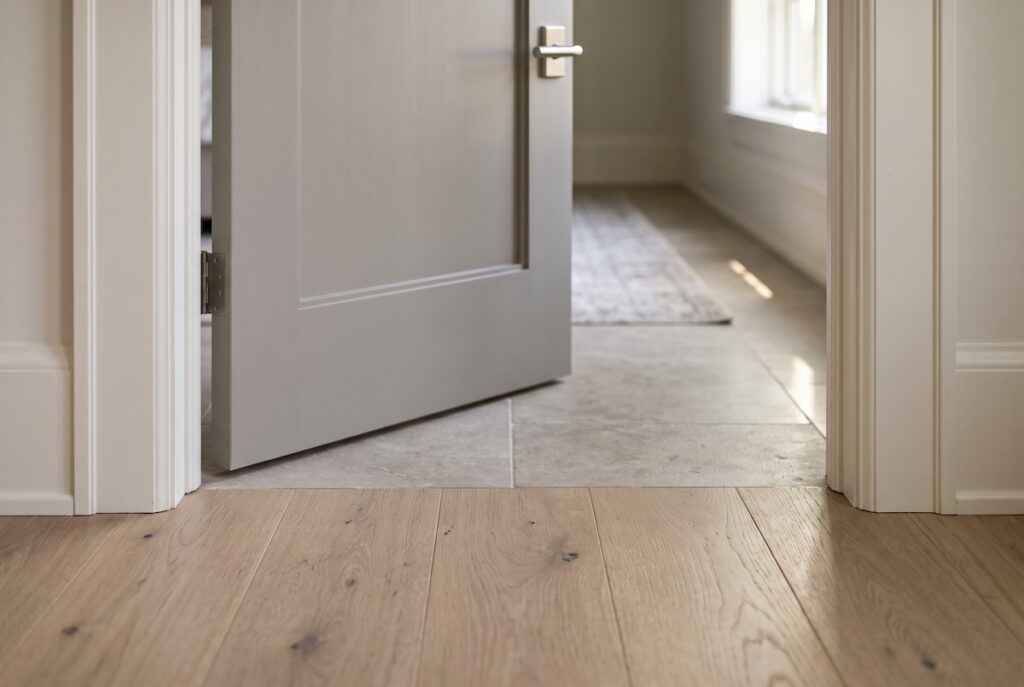
The places where two materials, two rooms, or new and old construction meet are the hardest to execute, and the first place shortcuts show. Clean transitions are a signature of serious craftsmanship.
Structural Integrity Behind Beautiful Design
Luxury renovations often involve ambitious ideas, dramatic openings, cantilevers, and unusual spans. Executing those without compromising structure takes both skill and restraint. Our best-loved projects are often the ones where a client trusted us with genuinely difficult design elements, and we brought them to life without cutting a single corner.
Longevity
The ultimate proof of craftsmanship is time. A luxury remodel done to a high standard still looks intentional and holds together long after cheaper work has started to show its age.
Materials: Where Quality Is a Long Game
Craftsmanship and materials are two halves of the same equation. The finest execution can’t compensate for materials chosen only for their price, and the finest materials are wasted on careless installation. Luxury remodeling treats material selection as a long-term decision rather than a line item to minimize.
That shows up in a few ways:
- Solid over veneered where it counts. In the elements that take daily wear and define the feel of a space, quality construction and genuine materials age far more gracefully than their cheaper stand-ins.
- Natural materials that patina, not deteriorate. The best materials look better with time, developing character rather than simply wearing out.
- Sustainable choices that also perform. Many homeowners investing in a premium renovation want materials that are both responsible and durable, and increasingly, those goals align rather than compete.
- Consistency of quality throughout. True luxury isn’t a few showpiece elements surrounded by builder-grade filler. It’s a coherent level of quality across everything, including the parts guests never see.
Selecting materials this way costs more upfront. It also means you’re not redoing the work in five years, which is the most expensive outcome of all.
How to Tell Real Craftsmanship From Marketing
Since nearly every builder claims quality, how do you actually evaluate it before you hire? A few reliable tells:
- Ask about invisible work. A builder who lights up talking about framing, substrate, and waterproofing the parts you’ll never see is one who takes the whole build seriously. Vague answers here are a warning sign.
- Look at transitions and details in their past work. Miters reveal the meeting points between materials and the operation of doors and drawers. This is where skill hides in plain sight.
- Check whether clients come back. Repeat clients and referrals are the market’s honest verdict on whether a builder’s quality holds up. Marketing can be bought; a decade of referrals cannot.
- Notice how they talk about time. Craftspeople understand that quality can’t be rushed, and they’ll be honest about realistic timelines rather than promising whatever wins the job.
Craftsmanship Deserves a Process to Match
A chaotic process can still undermine exceptional craft. The rarest thing in luxury remodeling is a builder who pairs genuine skill with genuine transparency, and that pairing is exactly what we’ve built Nordic Builders around.
- Fixed-price contracts with clear change-order terms, so a premium project doesn’t come with an unpredictable price.
- Full 3D renderings, so you can see ambitious design ideas rendered in detail and approve them with confidence.
- A full-time project coordinator and on-site project manager, so quality and schedule are each actively owned.
- Weekly updates, a dedicated group text, and the Buildertrend portal, so the experience is as considered as the craft.
- Clean, respectful job sites, because a luxury home should be treated like one throughout the build.
We’re a family-run firm, and 98% of our work comes from referrals and repeat clients, the kind of trust that’s only earned by delivering project after project.
Ready for a Renovation Built to a Higher Standard?
If you’re planning a luxury renovation in South Charlotte and you care about the parts most builders hope you won’t inspect too closely, let’s talk. We’d welcome the chance to walk your home and show you what European-standard craftsmanship looks like in practice.
Book a discovery call with Nordic Builders today, and let’s build something made to last.
Frequently Asked Questions
What does “European-standard craftsmanship” actually mean?
It refers to the precision, joinery, and material knowledge that come from the formal European carpentry apprenticeship tradition, working to tighter tolerances and treating the invisible structural and substrate work as seriously as the visible finishes. Our owner, Yeti, trained through a Norwegian apprenticeship and builds to those standards.
Why does luxury remodeling cost more than a standard renovation?
Much of the cost is in the work you don’t see: proper framing, substrate preparation, waterproofing, and skilled finish carpentry, along with higher-quality, longer-lasting materials. That upfront investment is what protects the home’s beauty and integrity for decades rather than a few years.
Can you handle ambitious or unusual design elements?
Yes, some of our most rewarding projects have involved genuinely difficult design elements that other builders shied away from. We bring them to life without compromising structural quality, and you’ll see the design in full 3D renderings before we begin.
How do I know a builder’s craftsmanship will hold up over time?
Look at longevity and reputation. Ask about how they handle the invisible work framing, waterproofing, transitions and whether their past clients come back and refer others. For us, 98% of our work is referral-based and repeat business, which is the clearest long-term proof craftsmanship can have.